Tuesday, April 7, 2009

Technology Enhanced Lesson Slideshare

Life In The Desert
View more presentations from andiehansen.

One thing I learned by watching other presentations about integrating technology into lessons in the classroom was that it is absolutely possible to do this, and to do it often. By simply projecting an interactive website through an LCD projector, students can become so excited about a topic like science that they may not otherwise be interested in. Incorporating technology can be easy and done in an effective way if some effort and thought is put into it. 

Internet Safety


  • What article did you choose to read for your fourth article?
  • The article I chose to read for my fourth article was "I have a question" by William C. Porter. He discusses answers to the question how we can take advantage of what is available on the Internet while avoiding objectionable material and questionable people. The three ways he discusses protecting his family from dangers on the internet is 1. parental awareness and involvement 2. family rules and 3. filtering. I think the most important of these three is parental awareness. Parents need to know what their children are looking up on the internet and how much time they are spending on the internet. Parents involvement can help avoid the dangers that are prevalent with the internet. 
  • What were the most important things you learned from the readings?
  • One of the most important thing I learned from the reading is that a way to show students and children that I love them is by showing interest in their internet use. They will see that I genuinely care about what they do and what they choose to spend their time doing. M. Russell Ballard talked about how the internet and the media, influenced by Satan, are slowly tearing down the strongholds of families. They are portraying good things as bad, and bad things as good. They are undermining the influence parents should have on children. We need to be aware that these things are happening and not just having a blind eye to what is currently attacking our families. This awareness will help us to build up defenses and know how to combat this negativity. Having a good filtering system will help eliminate many of the dangers that the internet imposes. The filtering system can help us to avoid many of the issues that will arise but we need not rely solely on this function. 
  • How will what you have read influence your actions as a parent and/or teacher of children and youth?
  • What I have read will influence my involvement with my students and children and the internet. When my students are using the internet for projects and other things along those lines, I should be actively involved in making sure they are making good use of their time and appropriate use of the internet. One of the most influential things I read from the articles  is how to appropriately model for students and children how to appropriately and effectively use the internet. This modeling can be so effective. If I am choosing to watch and use the internet to research important and uplifting things, this may inspire the students and children to do the same. 
  • How can you use what you have learned from the reading to have a positive influence on family and friends?
  • From the reading I have a feeling of being able to positively use the internet and shy away from the dangers that exist. I think that many people are afraid of the internet. This is probably because they hear about all the horror stories and negative things that are associated with it. A way to combat this fear and find positive ways the internet can influence our family and friends. One positive way to use the internet is to have a family blog or family website where other members of the family, far and wide, can access the sites and stay in contact with the family. I am aware of what horrible things exist on the internet and how cyber bullying can negatively effect our youth. I feel like after reading these articles I am more prepared to deal with the internet and issues that may arise in the classroom or in my home. 

    Doing:

    I talked with my 11 year old brother about internet safety, specifically cyber bullying. In the news there have been many reports about cyber bullying and I wondered if my brother had heard about this, know what it means, and how to avoid it or stop it from happening. I shared with him what I learned about cyber bullying. I shared that it exists, that it is detrimental, and how we should not participate in it. He seemed receptive and said that he didn't really know what the term meant when I first asked him about it. Once I explained it, he seemed to understand how it could happen and what it meant. He told me that it was a very bad thing to do. I am glad that he sees how negative it is. The conversation was short and positive. I think it was valuable because I saw that my brother, although young, knows some of the pitfalls of the internet and knows that there are negative things that exist. He can recognize what cyber bullying is and I value that I am certain he will not participate in it. 

    Thursday, April 2, 2009

    Teaching Reflection

    For my reflection of teaching I observed my mentor teacher, Mrs. Bernfeld, teach her 3rd grade class at Deerfield Elementary a lesson on measurement. She specifically taught them inches, feet and yards—what they are, how to measure them, and how to convert from one measurement to another. Her lesson objective reflects what she taught the students and how she assessed them. She made sure students knew what she taught them by doing a very interactive activity.

                Mrs. Bernfeld introduced the lesson by focusing the student’s attention on measurement. She did a read aloud that explained how we came to using the standard measurement of a foot because of a story about it being the size of a king’s foot. She also reviewed that it is important to have a universal way of measuring things so that anyone can know what you exactly mean. This review further concreted in the student’s minds the importance of universal measurements. It seems like the information has been moved into their long-term memory. Mrs. Bernfeld used Vygotsky’s principle of scaffolding to teach the concepts of measurement. She guided them through each step of the activity with modeling, guided practice and then sent them to do individual work with measurements. Through this she was able to teach about class unity and cooperating with others. She gradually released the responsibility of learning with the students. Working with partners, she had the class measure various things in the classroom and they were forced to choose inches, feet, or yards to measure them. As a partnership students could collaborate and make good choices in their measurements.

    After this activity she brought them back to the carpet to review what they measure and how they chose to measure it. She reinforced that when things are small, inches are used and visa versa with yards and large things. Here students were writing their results, which reflect linguistic intelligence. They were also using visual-spatial intelligence by looking at the items and seeing how big they are in comparison to a yard, foot or inch. She also emphasized group work, which reflects the interpersonal intelligence. Mrs. Bernfeld did a great job of incorporate many of Gardner’s multiple intelligences from his theory. She appealed to kinesthetic, verbal and spatial learners in the activity. Students were physically measure things, they were listening to her reinforce correct ways to measure things and they were seeing how big inches, feet and yards were. The assortment of learning styles gave all students a chance to learn the material through whatever type of learning they prefer. Mrs. Bernfeld held the class’s attention and every student during the lesson seemed engaged and on task.

    Another aspect of learning that was implemented was Sternberg’s Triarchic view with each of the three aspects touched on. AS a class we came up with our own definitions for terms of measurement we discussed which reflects on the creative part. We analyzed the different types of measurement with how they relate to each other through conversion and their differences. Through discussion we decided how we would use measurements in our real life and how important and useful they can be.

    Bloom’s Taxonomy can also be seen during her lesson. Students recalled what they had already learned in previous lessons at the start of the lesson. This prepared their minds for learning. They then applied their knowledge and analyzed how they could use the new information they learned during the lesson. 

    I feel like Mrs. Bernfeld did a great job giving all types of learners opportunity to understand the concept of measurement and conversion. She offered help when needed and backed away to give the students a challenge. She implemented Vygostgy’s scaffolding, Gardner’s multiple intelligences, Sternberg’s triarchic view, and Bloom’s taxonomy to teach the lesson so that as many students could be influenced and engaged during the lesson. 

    Wednesday, April 1, 2009

    Modules 6-8 Questions

    1. Renee explains to her sister her own impressions, feelings, and beliefs about the new Humanities professor she has this semester. Her attempt to do this shows that she has _________.  (self-concept)

    2. Many teenagers begin to question who they are as people and what their purpose is. This is an attempt to construct an _________ that provides a basis for adulthood. (identity) 

    3. Lisa is constantly trying new activities with her fiance and seems willing to do so. She is eager to explore these new activities and look for new directions to take in life. She has developed an ________. (initiative)

    Tuesday, March 24, 2009

    Technology Enhanced Lesson Used

    I think it would be a great way to incorporate technology into a lesson that I already have planned. I have planned a guided reading lesson to do on Friday morning. This guided reading lesson is with a small group of students, around 5, and they will be introduced to a new book. I will make a powerpoint presentation to introduce the students to the new book. This could be a great visual way for students to be prepared for what they will be reading about. I will include slides that show new vocabulary that they will be exposed to as well as information about the author. Students may find it interesting to learn about the people who write the books they read. I think that by displaying this Powerpoint presentation on a laptop to the class would be a great way for students to access the information. When a small group of students is being taught, using one laptop should be sufficient for them to be able to see the information. I think that incorporating technology into lessons already planned and thought of is a much better way to use technology rather than base the lesson around the technology. Since I had planned on introducing a new book to a reading group, I figured that I could enhance the lesson by using technology, specifically Powerpoint.

    Tuesday, March 17, 2009

    Technology Enhanced Lesson

    An idea to technologically enhance a lesson on simple machines--identification and their specific uses--would be to first introduce the concept of simple machines. Go over them so students are aware of the various types of machines. Then a way to check for understanding would be to go to an incredible website that can be displayed on the projector that is in my 3rd grade class. The website lets you go to a room, such as a kitchen, and then you can highlight various items in the room. Students can then be quizzed on what type of simple machine was used. This activity seems like it would be fun and engaging for the students. They can all interact with the website by suggesting what object in the room to highlight next. This technology is readily available for use in the classroom. The website is found at edheads.org. Once there, the simple machines activity can be found. The website is http://www.edheads.org

    Tuesday, March 10, 2009

    Classroom Inventory Technology

    While doing the inventory of classroom technology I was rather surprised that the classroom did not have a permanent computer in it. The teacher brings her laptop everyday that students can access to, but I think it was unfortunate that there was not a classroom computer. I was glad to see that there was access to wireless internet though. I also thought it was interesting that every computer in the lab was a Mac computer. Mac computers are great, but I think it would be better to incorporate PC's as well so students are aware of them and their differences. In every 5th grade class at Deerfield, there is a classroom set of labtops and also a smartboard. I would love to see more technology in lower grades so that students are immersed in technology early on. I love the interactive intercom that the school uses. The office can contact the teacher through this intercom and the teacher can simply talk back and communicate. I was impressed with the school's technology and the resources available, but disappointed with each classrooms permanent technology.

    Wednesday, February 25, 2009

    Quiz Questions for Modules 27-30

    1. When students are given tasks that have connections and implementations to problems that they may face in the real world, they have been given authentic tasks.
    2. Problem-based learning often deals with problems that do not have clear cut "right" answers.
    3. A student exhibiting learned helplessness shows that they cannot complete their work without lots of extra help from a teacher.
    4. Achievement in school can be promoted by goal orientations.
    5. Incentives are objects or events that encourage behaviors, but also can be used to discourage behaviors.

    1. T
    2. T
    3. F
    4. T
    5. T

    Over the River Again

    TPACK Questions for Virtual Tour

    What is the content you’ll be using in your lesson?

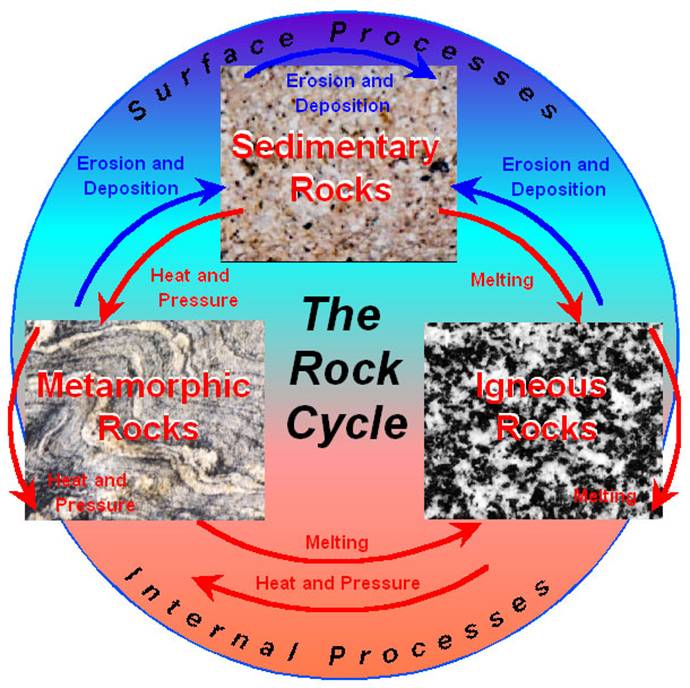
    The content that I will be using for my lesson is found in the Utah state core curriculum for 4th grade. It is under Standard 3, Objective 1, c which states "Sort rocks by appearance according to the three basic types: sedimentary, igneous and metamorphic (e.g., sedimentary–rounded-appearing mineral and rock particles that are cemented together, often in layers; igneous–with or without observable crystals that are not in layers or with or without air holes or glasslike; metamorphic –crystals/minerals, often in layers)." I remember having to memorize rocks for a class I recently took and was disappointed that my teacher could not come up with an interesting and fun way to have us learn and remember these rock names. I feel like this activity with GoogleEarth will help students become excited about learning about rocks.

    What is the pedagogy you’ll be using and why is it a good fit with the content?

    I am using good pedagogy by selecting content that is normally hard to understand and unclear of the importance of it. My students will be using classification, researching, comparing as well as contrasting the three different types of rocks. I feel like since the students have first been given an overview of the different rocks they will benefit more from exploring the rocks and where they are formed themselves.

    What is the technology you’ll be using and why is it a good fit with the content and pedagogy?

    The technology I will be using for this lesson is Google Earth as well as images from online sources and information accessible from Wikipedia. I feel like GoogleEarth is a good fit for the content because it enables students to see real life examples of rocks and how rocks are formed and where they are formed. The students can see the rocks in different areas and compare and contrast the characteristics of the rocks as well as the areas that they are looking at. No other tool that I know of allows people to view real life areas on a zoomed in scale at street view. Students can see so much of what they are learning now, instead of having to rely on maps and pictures. They can go there through GoogleEarth and see the areas. GoogleEarth is an exciting tool that students will love.

    Virtual Tour Plan

    Location ActivityGoogle Earth Content
    1.West Indies (igneous)Briefly introduce the rock cycle and explain that they will see places where all 3 parts occur. Have students reach the location on GoogleEarth. Ask the students what type of rock is formed at the volcano they see at Mount Rausu; discuss what happens in forming igneous rocks. Then have them watch the igneous rock video at
    http://activities.macmillanmh.com/science/c
    a/scienceinmotion/Common/SIM.html?Module=../Grade4/Chapter3-IgneousRockFormation/Then have the students look at pictures of various igneous rocks.

    Panoramio

    Terrain Feature

    Lables

    Pathway

    2.Grand Canyon, Arizona (sedimentary)Have students reach the location on GoogleEarth. Teacher will explain process of forming sedimentary rocks. Have them watch the sedimentary rock video at
    http://activities.macmillanmh.com/science/c
    a/scienceinmotion/Common/SIM.html?Module=../Grade4/Chapter3-IgneousRockFormation/
    Have students look at pictures of various sedimentary rocks
    Panoramio
    Terrain Feature
    Lables
    Pathway
    3.Maunola, Hawaii (metamorphic)Have students reach the location on GoogleEarth. Teacher will explain process of forming metamorphic rocks. Have them watch the metamorphic rock video at
    http://activities.macmillanmh.com/science/c
    a/scienceinmotion/Common/SIM.html?Module=../Grade4/Chapter3-IgneousRockFormation/Have students look at pictures of various metamorphic rock
    Panoramio
    Terrain Feature
    Lables
    Pathway
    4.Karnataka, India (sedimentary)Have students reach the location on GoogleEarth. Have students explore this area using the zoom features and others available to identify at least one type of rock in the area. Once students identified one rock formation have students explore other locations and the rocks there.Panoramio
    Terrain Feature
    Lables
    Pathway
    Details of image overlay / path / polygon:In our Google tour we used the Geographic web features of Panoramio. We also used the terrain feature, and labels so the students would know what they were actually looking at. Our tour began at Mount Rausu, Japan, it then went to the Grand Canyon, Arizona, next it went to Manualoa, Hawaii, and finally to Karnataka, India. The path shows the travel route to each location.
    SOURCES:
    Igneous Rock Formation:http://www.outreach.canterbury.ac.nz/resources/geology/glossary/igneous.jpg
    Three Types of Rock Formation:http://i.ehow.com/images/GlobalPhoto/Articles/2281951/RockCycle-main_Full.jpg
    The Rock Cycle:http://web.ics.purdue.edu/~braile/edumod/pebble/pebbleAM_files/image007.jpg
    Sedimentary Rock Formation:http://www.energyinst.org.uk/education/glossary/images/sediment.gif
    Metamorphic Rock Formation:http://www.bbc.co.uk/schools/ks3bitesize/science/images/sci_dia_33.gif
    Metamorphic Rocks:http://honolulu.hawaii.edu/distance/geolab/R*M/metrx.jpg
    Igneous Rocks:http://honolulu.hawaii.edu/distance/geolab/R*M/metrx.jpg
    Sedimentary Rocks:http://honolulu.hawaii.edu/distance/geolab/R*M/sedrx.jpg

    Tuesday, February 24, 2009

    Educational Psychology In-class Teaching Reflection

             My partner for my in-class teaching experience was Ellie Campbell. One of the biggest strengths of the experience was that my partner and I cooperated so well together. We were able to work independently before we met to come up with ideas on our own about our subject and interesting ways to present it to the class and then when we met together our ideas collaborated and we were able to come up with more ideas together. The subject we were assigned to present to the class was “Cognitive Development & Language” and we presented to the class Piaget’s cognitive theory of development. Another strength of my presentation was that I implemented the use of many videos to explain concepts and present examples of behaviors. Since it was impossible to bring in a child to demonstrate conservation or egocentrism, we used videos of children to show these. I think that this was most beneficial for the class to understand the concepts. A weakness that I noticed that our presentation had was that we did not have a very interesting attention getter or anticipatory set. In another class we discussed the importance of this and getting students minds ready for a lesson and I feel like our presentation lacked this. If I were to present again I would include an activity to preface what would be taught later. I think that this would improve the presentation. The educational psychology principles that I tried to incorporate in my teaching was implementing several areas of Bloom’s taxonomy. We had the class analyze what they saw in the short movie clips in small table groups and they then applied their knowledge and understanding of the concepts by presenting the information to the class or creating word maps using vocabulary explained. We used aspects of informational processing theory to help the class remember the important concepts we tried to teach, we showed the class how to categorize and group new information using charts we gave them and also charts they created themselves. We modeled chunking to the class and I think this also helped them to remember what was taught. I really feel confident about the lesson Ellie and I taught the class. I feel like the concepts we concentrated on were explained effectively and in a way in which the class will remember. 

    Wednesday, February 18, 2009

    Modules 24-26, 31 Quiz

    a.     a. Spencer believes that he will be able to make the basketball team before try-outs begin.

    b.     b. Darren does not know much about physical education but has asked to meet with a physical education professor to learn more.

    c.      c. Paige always stops and thinks about the problems she faces and how to solve them.

    d.     d. During a horseriding lesson, Renee watched her instructor trot and do tempe changes to learn how to do them herself.

    e.     e. Julie comes to an answer during her test during logical and systematical examination of the problem, using the evidence given.


    1.     1. Cognitive apprenticeship

    2.     2. Social learning theory

    3.     3. Self-efficacy

    4.     4. Critical Thinking

    5.     5. Self-regulation


    answers: 1. b, 2.d , 3. a, 4. e, 5. c

    Virtual Tour

    http://sites.google.com/site/andieandpaigesite/my-ple-files


    This is a link to my filing cabinet which contains the Virtual Tour.

    Wednesday, February 11, 2009

    Module 2-5 Quiz Questions

    Please match the following definitions (a-e) with their terms (1-5).


    a. children’s self-talk, which guides their thinking and actions. eventually, these verbalization and internalized as silent inner speech.
    b. arranging objects in sequential order according to one aspect, such as size, weight, or volume
    c. assuming that others experience the world they way you do
    d. the rules for when and how to use language to be an effective communicator in a particular culture
    e. the process by which neural fibers are coated with a fatty sheath that makes message transfer more efficient

    1. myelination
    2. seriation
    3. pragmatics
    4. egocentric
    5. private speech

    Digital Storytelling Over the River

    Wednesday, February 4, 2009

    Modules 15-17 Questions

    1.     Any event that follows a behavior and increases the chances that said behavior will happen again is a(n):

    a.     aversive.

    b.     reinforcer.

    c.      stimulus.

    d.     antecedent.


    2.     Shaping is also referred to as:

    a.     task analysis.

    b.     successive approximations.

    c.      Premack principle.

    d.     positive practice.


    3.     When a student changes their negative behavior, thinking, or emotions after observing a student with positive behavior, thinking, or emotions they are:

    a.     self-managing.

    b.     self-instructing.

    c.      modeling.

    d.     modifying.


    Answers: 1. b, 2. b, 3. c.

    Digital Storytelling Rough Draft

    This is our rough draft of our storytelling. 

    Digital Storytelling TPACK Questions

    • What is the content you’ll be using in your lesson?
    The content that I will be using in the lesson is from the Utah State Core Curriculum Standard 8, Objective 6 which says that students should "write daily to communicate effectively for a variety of purposes and audiences...[through writing] in different forms and genres." I have decided that the students will produces personal writing through a familial genre in which they create a story about a family vacation they have gone on in the past or hope to go on in the future. We will be using pictures from a self-produced and self-illustrated book that describes an experiences of going to visit a grandmothers house. The book is titled Over the River and Through the Wood. 
    • What is the pedagogy you’ll be using and why is it a good fit with the content?
    The pedagogy that I will be using is through selecting a writing project that students in class will work on. Some projects include ABC Storybooks, Circle Stories, Adventure Stories and Family Stories. In this particular lesson students will create a Family Story and focus on that. I think that it is a good fit with the content because in the content it describes doing personal writing. For younger students, around grade 3, they are most familiar with stories about their family and experiences they have personally gone through, so creating a story on their own experiences would be most pertinent for them and rememberable. 
    • What is the technology you’ll be using and why is it a good fit with the content and pedagogy?
    The technology that I will be using is the pen and paper storytelling template. This is a great and easy way to make ideas come together and flow easily. Having the visuals on one side and the words and explanations on the other make it explicit the scenes that I want to create. I think that this is a good fit with the content and pedagogy because students will use a storyboard to brainstorm their ideas and organize their thoughts as they create a story that reflects on a personal experience they have had traveling with their family. The storyboard will help the students create their stories. I also plan to use IMovie to put images and audio explanations together to present the stories in a fun and interesting way. Many of the students will react excitedly to creating a movie since they have seen so many and can relate to movies. They will feel proud of their work and how amazing it is to be completely involved in the movie-making process.